

Bid Smarter: AI Signals That Map to FAAB Prices for Fantasy Managers
Use AI waiver-wire advice to quantify opportunity and set FAAB bids, so you stop overpaying for noise and start winning meaningful roster upgrades. Rely on it when the signal behind a pickup is moderate to strong: a real snap-count jump, a confirmed role change, an injury with a clear timeline. AI still can’t read your league mates’ tendencies or your own bench depth, so treat its output as the starting bid, not the final word.
TL;DR:
- A snap-count increase above 20 percentage points generally indicates a sustainable and valuable role change worth targeting.
- Injuries lasting more than six weeks justify larger FAAB bids, while shorter absences require only modest bids or streaming plays.
- Confidence scores and trend confirmation across multiple games are essential to avoid overpaying for short-term or noisy workload spikes.
- FAAB bidding should be based on estimating the market value rather than arbitrary round numbers, with specific guidance on budget allocations.
- Proper use of AI tools involves feeding accurate weekly data, assessing confidence levels, and considering league-specific bidding behavior to improve claim accuracy.
Table of Contents
- What AI Waiver-Wire Advice Actually Analyzes
- The Four-Step Framework Behind Every Good Waiver Call
- FAAB Bidding vs. Priority Waivers: Different Games Entirely
- Common High-Value Scenarios and How to Read Them
- Running AI Tools Through Your Weekly Waiver Workflow
- Where Manny’s Variety Fits Into This Framework
- The 7-Point Waiver Checklist
- Why the Framework Matters More Than the Tool
- Sources
What AI Waiver-Wire Advice Actually Analyzes
AI waiver-wire tools take in the same public data every manager can see, but process far more of it, far faster. The inputs typically include injury reports, snap counts, depth-chart notes, target share, air yards, and matchup data for the coming week. What comes out the other end is what separates a useful model from a glorified stat sheet.
- Ranked claim recommendations, ordered by projected value over the next available replacement
- FAAB bid suggestions calibrated to your remaining budget and league size
- A confidence readout showing how strong the underlying signal actually is
- An expected points figure that reflects the adjusted role, not last week’s box score
The real value isn’t speed. It’s that AI can spot a trend before it becomes obvious, like a running back’s snap share climbing over three straight weeks while his box-score production still looks average. Some platforms go further and attach a confidence score to each pickup, which helps you triage a crowded waiver list fast instead of eyeballing ten similar-looking names.
The Four-Step Framework Behind Every Good Waiver Call
Whether you’re reading an AI tool’s output or building your own gut check, the underlying logic is the same. Break it into four steps and you’ll rarely misjudge a claim.
- Detect the opportunity signal. Pull injury designations, depth-chart notes, and snap or target percentage changes from the last two to three games. This is where most managers stop, and it’s why most managers overpay for noise.
- Adjust the baseline projection using absorption rates. When a starter goes down, the backup doesn’t inherit 100% of the touches. Historical data puts absorption rates in the 60% to 80% range of vacated usage, depending on scheme and the presence of a committee.
- Calculate value over replacement (VOR). Compare the adjusted projection against the points you’d get from your worst usable bench player or the next-best waiver option at that position.
- Convert VOR into a FAAB bid. Multiply the projected season-long advantage by the remaining weeks of relevance, then weigh it against your total budget.
Signal strength matters more than most managers assume. A snap-count increase above 20 percentage points typically signals a real, sustainable role change. A 10 to 20 point bump is worth watching but not chasing yet. Anything under 10 points is usually noise, not opportunity, according to threshold guidance from waiver-wire analytics research.
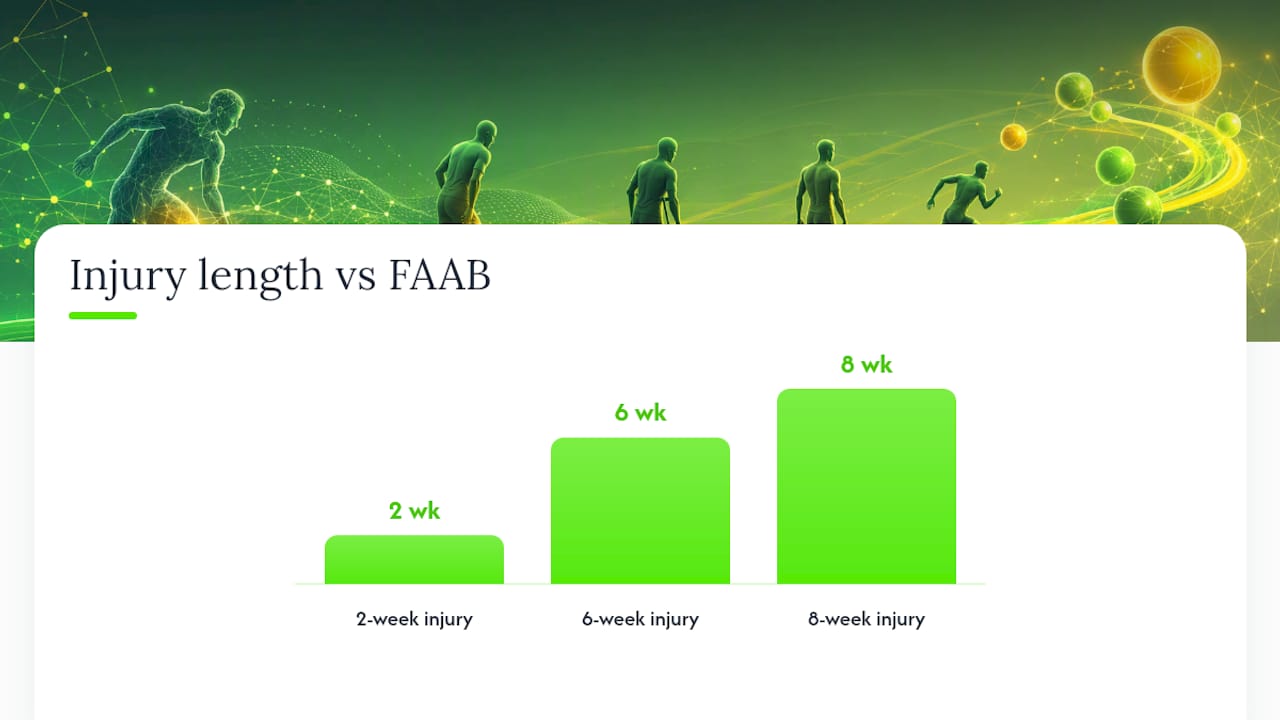
Injury duration matters just as much as absorption rate. A two-week injury favors a cheap streaming add. A six-to-eight-week injury justifies a real chunk of your FAAB budget, because the value compounds over more weeks of starter-level production.
FAAB Bidding vs. Priority Waivers: Different Games Entirely
The framework above applies to both systems, but the decision you make with it changes completely depending on your league’s waiver format.
- Priority waiver leagues turn every claim into a binary choice: use your priority now, or save it for something better. Since a claim either works or it doesn’t, accuracy and timing matter more than budget math. Claim as soon as the signal clears your threshold. Waiting a day to “see more” often means someone with worse priority beats you to it.
- FAAB leagues turn every claim into a bid-sizing problem. Your job is to estimate the market clearing price, the amount a rational competitor would pay, and bid just above it rather than guessing a round number.
- Bid sizing benchmarks suggest dedicating a moderate portion of your remaining FAAB budget to a genuine top-tier injury replacement, and far less, often single digits, to depth adds or short-term streamers.
- FAAB is fundamentally a game-theory problem. You’re not just valuing the player. You’re modeling what your league mates are likely to bid, which means watching claim history matters as much as watching snap counts.
Common High-Value Scenarios and How to Read Them
Certain situations produce the biggest edges on the waiver wire, and each one requires reading the signal a little differently.
- Injury replacement, single absorber: One clear backup takes over the workload. This is the highest-confidence, highest-bid scenario.
- Injury replacement, committee split: Two or three players share the vacated touches. Confidence drops, so your bid should too, even if the raw opportunity looks similar on paper.
- Emerging role confirmation: Wait for elevated usage across multiple games before trusting it. A single big performance, even a great one, isn’t a role change yet.
- Matchup streaming: Short-term pickups (a defense, a tight end against a soft matchup) deserve a small bid and a short leash, not a season-long commitment.
Never chase a single-game anomaly. Require at least two to three games of trend confirmation before treating a workload bump as real, a rule that separates disciplined managers from ones who burn FAAB every Tuesday.
Running AI Tools Through Your Weekly Waiver Workflow
A good AI tool only helps if you feed it the right information at the right time and read its output correctly.
- Run your first check after practice reports drop, usually Wednesday through Friday, to catch early role changes.
- Re-run the model after Monday Night Football, since inactives and late-breaking usage notes from the full week are now baked in.
- Supply your actual roster, league scoring settings, remaining FAAB, and positional needs. Connected tools that read your actual league rules and roster produce sharper recommendations than a generic top-50 list.
- Read the confidence band next to each recommendation, not just the ranking. A moderate-confidence pick with a high bid suggestion deserves a second look before you commit real budget.
- Adjust for your league’s known bidders. If a rival consistently overbids on running backs, nudge your ceiling down for that position and up elsewhere.
Pro Tip: Keep a simple log of what you bid, what won, and what the winning bid actually was each week. After four or five weeks, you’ll have a rough map of how your specific league prices opportunity, and that map is worth more than any single week’s projection.
Where Manny’s Variety Fits Into This Framework
Manny’s Variety builds sport-specific AI engines that follow this same opportunity-to-action pipeline, running real-time simulations across usage data, injury reports, and matchup context to surface actionable recommendations rather than raw stat dumps.
- The platform has tracked over 1,600 graded picks with a 63.5% win rate and a net return of 443.9 units, a public record most competitors in this space simply don’t publish
- That track record matters here because it reflects the same modeling discipline this article’s framework depends on: separating durable signal from short-term noise
- AI output is still probabilistic. It narrows the decision, but a manager’s read on league mates, bye weeks, and roster fit still belongs in the final call
If you want to see how those engines translate signal into a recommended action across a full slate, the live in-game picks page shows the process in real time, and the fantasy football hub breaks down the underlying methodology further.
The 7-Point Waiver Checklist
Run through this before you submit any claim or bid.
| Check | What to confirm |
|---|---|
| Signal strength | Snap or target share change over 20 percentage points is strong; 10 to 20 points needs more evaluation |
| Role confirmation | At least two to three games of sustained trend, not one big outing |
| Injury timeline | Short absence favors a stream; multi-week absence justifies a bigger bid |
| Absorption estimate | Single-back committees split value; a clear lead absorber gets the bulk of it |
| Budget rule | a moderate portion of your remaining FAAB budget for a top-tier replacement, single digits for depth |
| Owner behavior | Note which rivals historically overbid at each position |
| Red flags | Bye weeks, tough upcoming schedule, or a starter’s imminent return |
Why the Framework Matters More Than the Tool
The mistake most fantasy managers make isn’t picking the wrong player off waivers. It’s skipping straight to the bid amount without ever quantifying the opportunity in front of them. A snap-count jump means nothing on its own. It only becomes actionable once you’ve run it through absorption rates, checked it against replacement value, and translated that into a dollar figure your league’s market will actually bear.
Conventional advice tends to stop at “grab the handcuff” or “he’s the next man up,” without ever pricing that claim correctly. The tools matter less than the discipline of running every claim through the same four steps: signal, absorption, value over replacement, bid.
If you take one thing from this framework, prioritize trend confirmation over reaction speed. Being two hours late on a claim after confirming three games of real usage beats being first with a guess based on one good stat line. AI models are useful precisely because they enforce that patience automatically. Use them to remove the guesswork, not to remove your own judgment about your specific league.
— Manuel
Sources
- Waiver Wire Analytics: Data-Driven Pickup Strategies
- How fantasy football FAAB actually works and how to win with it
- AVRA | Fantasy Football Decisions for Sleeper and ESPN