

Reverse Line Movement: What It Means for Your Bets
Reverse line movement happens when a betting line moves in the opposite direction of where most public bets are placed. If a strong majority of tickets are on the favorite and the spread drops instead of rises, that’s reverse line movement, or RLM.
It often signals that sportsbooks are protecting themselves against a smaller group of large, respected wagers rather than following the crowd. That doesn’t make it an automatic bet. It’s a prompt to check whether real value remains and to shop the number across books before it disappears.
- Definition: the line moves against the majority of public tickets
- Signal: frequently points to sharp or high-dollar money on the other side
- Action: verify the value is still live, then line-shop instead of betting blind
Key Takeaways
Reverse line movement signals that sharp or high-dollar money likely bet against the public, but the value it reveals often fades before most bettors ever see the alert.
| Point | Details |
|---|---|
| Core definition | The line moves opposite the majority of public tickets, often reflecting sharp money. |
| Dollar splits beat ticket splits | A few large wagers can move a line even when ticket percentage favors the other side. |
| Corroborate across books | A move at one sportsbook means less than the same shift appearing at three or more. |
| Act early, not late | Value is frequently priced in by the time RLM becomes visible, so late chasing rarely pays off. |
| Mannysvariety’s approach | Weighs RLM alongside other model signals, backed by a 63.5% win rate across 1,600+ archived picks. |
Table of Contents
- What Causes Reverse Line Movement?
- How Do You Track Reverse Line Movement?
- How Should You Use RLM When Placing a Bet?
- What Does Reverse Line Movement Look Like in Real Games?
- Where Does Reverse Line Movement Fall Short?
- How Mannysvariety Factors Line Movement Into Its Picks
- Sources
What Causes Reverse Line Movement?
Sportsbooks aren’t trying to predict outcomes. They’re managing liability, and that distinction explains most reverse line movement you’ll ever see.
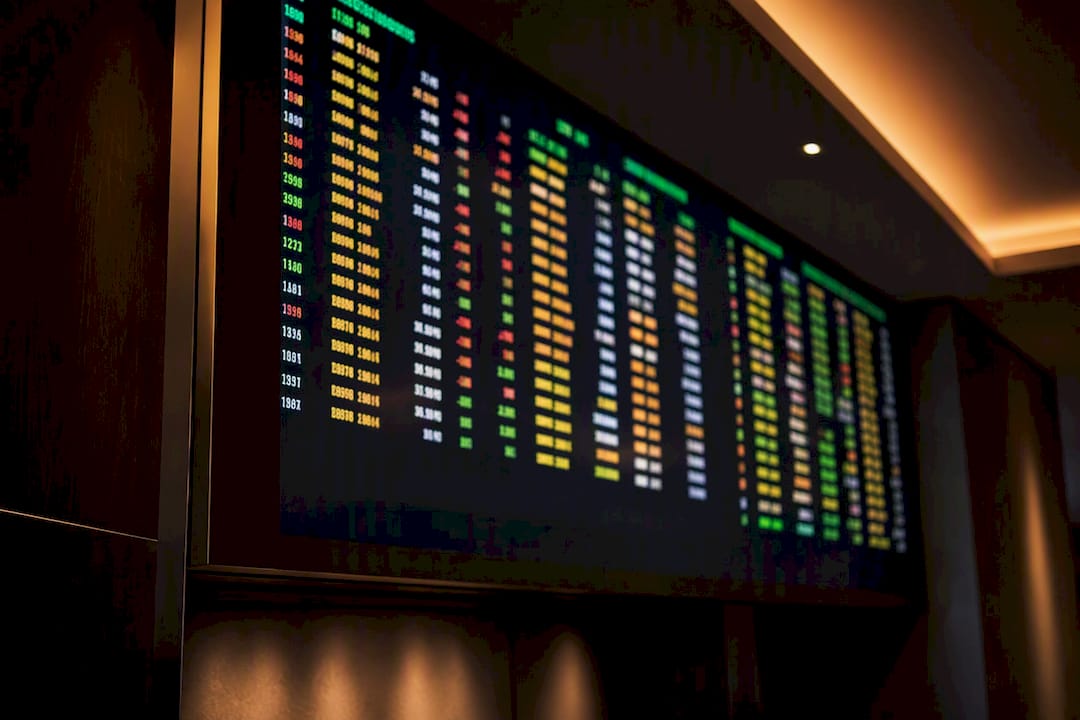
A book can take 500 small tickets on the favorite and still move the line toward the underdog if two or three large, respected accounts bet big on the dog. Sportsbooks move lines to balance liability, and when the number shifts against the public, it’s often because a small amount of sharp money outweighed a large number of small ones. News plays a role too. An injury report, a weather shift, or a late scratch can move a line in a way that looks like RLM but has nothing to do with betting patterns at all.
There’s also a copycat effect. Some sportsbooks lack the staff or volume to price every game independently, so they simply mirror the market leader. Books sometimes “move on air”, adjusting a number without taking a single matching wager, which means a move at one book means less than the same move showing up across three or four books at once.
- Sharp or high-dollar bets outweighing ticket volume
- Sportsbook risk management and liability balancing
- Breaking news (injuries, weather, lineup changes)
- One book copying another’s line without independent action
Pro Tip: Before you trust a line move, check whether it’s tied to a news event. If there’s no injury report or lineup change attached to the shift, that’s a stronger clue you’re looking at real market money rather than a reaction to information.
How Do You Track Reverse Line Movement?
Spotting RLM early requires comparing three things at once: the opening line, the public ticket percentage, and where the current number sits. When the line drifts away from the side carrying the majority of bets, you’ve found a candidate.
- Record the opening line the moment it posts.
- Track the public betting percentage on tickets, not just dollars.
- Check the current line every few hours, or use a line-tracking service that does it for you.
- Compare across at least three to five sportsbooks to confirm the move isn’t isolated.
- Note the timing. Movement in the first hour after open tends to reflect real sharp action more reliably than a shift on game day.
Ticket percentage alone can mislead you, since one $10,000 wager can move a line more than 200 $50 tickets combined. Dollar-weighted data is more informative than ticket counts whenever a sportsbook or tracking service publishes it. Treat sources that share both splits as more reliable than ones that only show ticket percentage.
- Watch the opening number and note the exact timestamp
- Prioritize dollar splits over ticket splits when both are available
- Set line alerts at multiple books rather than checking manually
- Weight early movement more heavily than late, game-day shifts
How Should You Use RLM When Placing a Bet?
Finding reverse line movement is only step one. The harder discipline is deciding whether to act on it, and most bettors get this part wrong.
Start by asking whether the best number still available offers value relative to your own read on the game. The value in a moved line is often already priced in by the time it’s visible to the public, so a line that shifted three points ago may no longer be worth betting at today’s number. Rather than chasing the new line at one book, shop across multiple sportsbook accounts to see if a slower-moving book still carries the older, better price.
Resist the urge to jump on every steam move you see late in the week. Early detection beats late reaction almost every time, because sharp money typically strikes fast and the market catches up within minutes at the biggest books.
- Confirm the number still clears your own expected-value threshold
- Check three or more books before placing the bet
- Skip large, late steam moves rather than chasing them
- Watch for betting limits if you move quickly across multiple accounts and books
Pro Tip: Sportsbooks track accounts that consistently bet into steam moves right before the market catches up. If you chase too aggressively, you risk limits on your action long before you risk your bankroll.
What Does Reverse Line Movement Look Like in Real Games?
RLM shows up differently depending on the bet type, and recognizing the pattern in each market speeds up your decision-making.
- Spread (NFL/NBA): The public heavily backs a home favorite, yet the line drops significantly toward the underdog. That drift toward the underdog is classic RLM. Grab the underdog at the improved number if your model still likes the value, or pass if the shift already reflects information you didn’t have.
- Moneyline (MLB): A road favorite opens with heavy public backing, but the line moves further against the public side. Sharp money pushed the price further against the public side rather than toward it, meaning the “public pick” got more expensive to bet.
- Totals (any sport): The Over draws a strong majority of tickets, but the total drops nonetheless. Money moved the number toward the Under despite the ticket count favoring the Over.
Where Does Reverse Line Movement Fall Short?
RLM isn’t a clean signal, and treating it as one is the most common mistake bettors make. By the time a move is visible on a public tracker, sharp money may have already cashed in on the better number, leaving you to bet a line with less value than the one that triggered the alert in the first place.
Ticket percentage data compounds the problem. Add in news-driven “dummy moves” that mimic RLM without any sharp money involved, and it’s easy to misread a signal that was never really there.
- RLM is frequently priced in before it becomes visible to the public
- Ticket percentage without dollar data can be misleading
- News-driven line shifts can look identical to sharp-money RLM
- Chasing moves repeatedly across books can trigger sportsbook limits
Some reverse line movement is genuinely noise rather than signal, especially at books with lower volume where a single mid-size bet can shift a number without any real market consensus behind it.
How Mannysvariety Factors Line Movement Into Its Picks
Mannysvariety’s sport-specific AI engines weigh reverse line movement alongside dozens of other model inputs rather than treating it as a stand-alone trigger, consistent with the practice of treating RLM as one signal among many. The platform has posted a notable win rate and net return across many tracked picks, all logged in a permanent, publicly gradable archive.
Line movement matters most when it confirms what a model already suspects about a mismatch in pricing, not when it’s chased in isolation.
Subscribers get access to daily picks, live in-game alerts, and archived reports that show exactly how a call was graded after the fact. That transparency lets you check a pick against the market’s own behavior instead of taking a service’s word for it. You can review the full NBA track record to see how graded picks stack up over time.
- 63.5% win rate across 1,600+ publicly tracked picks
- 443.9 net units returned, archived and gradable
- Daily picks, live alerts, and matchup reports built around model signals, RLM included
A Practitioner’s Take on Disciplined RLM Use
Three rules keep this simple: never bet a move you can’t corroborate across books, never chase a line more than 10 minutes old, and always check whether the shift has a news story behind it. I’ve seen bettors treat a single book’s shift like gospel, only to find three other books never budged. Combine the signal with the bankroll discipline you’d apply to any other bet, or it’s just another way to lose money faster.
— Manuel
Turn Line Movement Into a Repeatable Edge
Spotting reverse line movement is only useful if you can act on it before the value evaporates, and that’s exactly where most bettors lose the edge they just found. Mannysvariety builds that speed into the process: its sport-specific AI engines flag pricing mismatches the moment they appear, so you’re not manually refreshing five sportsbook tabs hoping to catch a number before it’s gone.
The daily picks come with matchup context so you understand why a line moved, not just that it did, and the live in-game picks extend that same model logic into games already underway, when late steam and injury news create some of the sharpest RLM windows of the day. For readers chasing common mistakes in fast-moving betting markets, this guide to avoiding costly betting errors covers similar discipline problems from a different angle.
Start with the Mannysvariety picks and pricing breakdown to see how daily alerts and archived grading fit into your current betting routine.
Sources
- What is Reverse Line Movement in Sports Betting? — Action Network
- Reverse line movement in sports betting: How to tell where the public vs. sharp money is going — The Athletic (NYTimes)
- Reverse line movement in betting | Why do bookmakers move lines? — Pinnacle