

Superflex Draft Strategy 2026: Gameplans and Auction Budgets
In most Superflex drafts, you should pick one of two gameplans before your first pick and stick to it: build a two-QB core in the first four or five rounds, or take one true elite QB and lean on value everywhere else. Both work. What loses drafts is switching between them mid-round because a name you like fell.
The one-line rule to carry into your draft: if you land a top-six QB early, pivot to Value/Wait; if you miss the top tier, force a second startable QB inside your next three picks. In an auction, that translates to budgeting $50 to $60 combined for two starting quarterbacks, or $70+ on one true QB1 and filling the rest with $1 to $8 value plays.
Watch for these three signals to know which gameplan fits your seat:
- Late draft slot or shallow QB depth in your league → lean Early-QB, since you won’t see elite QBs again for two rounds.
- QBs are getting drafted at their “correct” market price, not early → lean Value/Wait and let RB/WR scarcity work for you.
- You’re already seeing a QB run in the first 10 picks → decide fast whether to join it or pivot to a two-elite-RB approach and mop up mid-tier QBs later.
Key Takeaways
Winning a Superflex draft comes down to picking one gameplan, Early-QB or Value/Wait, and forcing every pick to serve that plan instead of reacting to the room.
| Point | Details |
|---|---|
| Pick a gameplan first | Commit to Early-QB (two QBs by round five) or Value/Wait before your draft starts, and don’t switch mid-draft. |
| Budget for three QBs | Plan a moderate combined budget for two starters and allocate some funds for a third QB in an auction. |
| Use tiers, not rankings | Group QBs into tiers of four to six players to know exactly when a position is about to run dry. |
| Build a toolbox bench | Split bench spots across bye coverage, handcuffs, and second-half upside instead of best-player-available. |
| Verify your data sources | Tools like Manny’s Variety offer a publicly graded, 63.5% accuracy track record you can check before trusting any prediction. |
Table of Contents
- What Does Superflex Mean for Draft Strategy?
- Should You Draft QBs Early or Wait? Two Gameplans
- How Many QBs Should You Draft and When?
- What to Do When QBs Start Flying Off the Board
- Building the Rest of Your Roster After the QB Decision
- Auction Budgets: Sample $200 Allocations
- How to Prepare Before Draft Day
- Draft-Day Checklist and Mistakes to Avoid
- Adjusting for League Size and Scoring Settings
- What Superflex Drafting Means for In-Season Management
- Consistent Rules Beat Reactive Drafting
- How Manny’s Variety Supports Your Draft Prep
- Sources
What Does Superflex Mean for Draft Strategy?
A Superflex slot lets you start a second quarterback in a spot that would otherwise take a running back, wide receiver, or tight end. That single roster rule flips the entire value chart, because a quarterback’s weekly floor is almost always higher than a flex-eligible RB or WR, and now two of them count toward your lineup instead of one.
FantasyPros tracks Superflex tiers where quarterbacks make up 14 of the first 27 players ranked, filling the top four tiers almost entirely. That’s not a mild adjustment from 1-QB rankings. It’s a structural rewrite of where value sits on the board.
Before you draft, confirm these settings, since even small differences change your gameplan:
- Number of Superflex/OP starting slots (one is standard; two makes QBs even more valuable).
- Total roster size and bench spots (bigger benches mean you can carry a third QB more comfortably).
- Passing TD scoring (4-point vs 6-point passing touchdowns shift QB scoring ceilings significantly).
- League size (10 vs 14 teams changes how many “startable” QBs actually exist).
A rough numerical picture: a top-tier QB in most 2026 formats projects a weekly floor in the high teens to low twenties, while a comparable-tier RB or WR floor often sits several points lower with far more week-to-week volatility. That gap is why the position gets drafted so much earlier here than in single-QB leagues.
Should You Draft QBs Early or Wait? Two Gameplans
Two macro strategies cover almost every good Superflex draft. Pick one before you’re on the clock, and let it guide every subsequent pick rather than reacting pick-by-pick.
Gameplan 1: Early-QB (two-QB core)
The Early-QB approach means locking up two startable quarterbacks inside your first four or five snake-draft rounds, or roughly $50 to $60 combined in a $200 auction. The goal isn’t necessarily two elite QB1s. It’s securing two players who won’t need to be replaced by Week 6, freeing you to attack RB and WR depth for the rest of the draft without worrying about your Superflex slot.
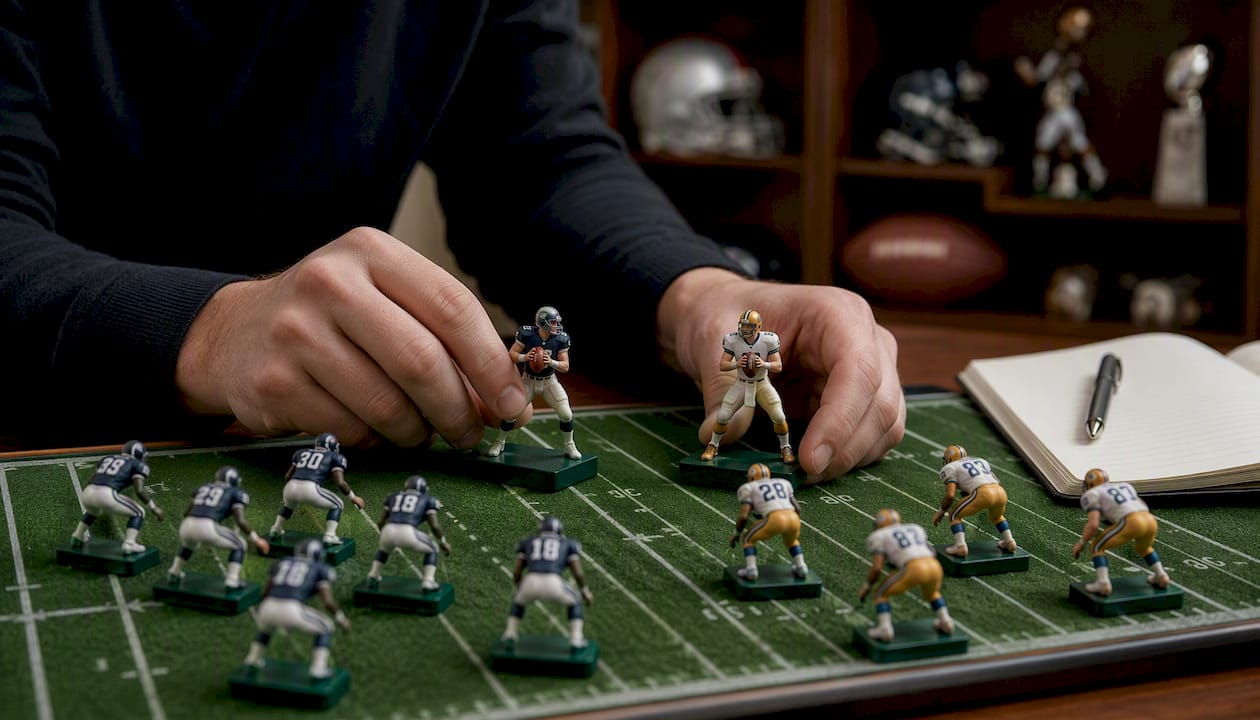
CBS Sports frames this as a straightforward choice: draft one true cornerstone QB early, or grab two starting-caliber options to guarantee weekly certainty at the position. Some analysts go further. Football Absurdity has repeatedly argued that in leagues where owners still undervalue QBs relative to their real scoring impact, rostering two elite ones is a repeatable structural edge rather than a lucky build.
Gameplan 2: Value/Wait
The Value/Wait plan skips the QB rush entirely and spends early capital on elite RB and WR talent instead, picking up quarterbacks once the position’s price correction hits, usually mid-draft in snake formats or after the first QB wave cools in auctions. This works best when your league prices QBs efficiently and RB/WR talent gets pushed down the board because everyone else is chasing passers.
Use these if/then rules to choose between the two:
- If your draft slot falls after the first six to eight picks, lean Early-QB, since elite QB1 talent often dries up before your next turn.
- If three or more QBs go in the first 12 picks of a snake draft, decide immediately whether to join the run or pivot hard to RB/WR and circle back for QB2/QB3 value.
- If your league runs 12+ teams with only one Superflex slot, Value/Wait gains strength since more startable QBs remain available deep into the draft.
- If your league runs 2-QB (mandatory, not optional Superflex), Early-QB becomes close to mandatory, since replacement-level QB2 options vanish fast.
| Gameplan | Snake Round Target | Auction $ Target | Best For |
|---|---|---|---|
| Early-QB | Rounds 1-5 for two QBs | $50-$60 combined | Late draft slots, 2-QB leagues, risk-averse drafters |
| Value/Wait | QB1 in rounds 6-9, QB2 in rounds 10-13 | $70+ on one elite QB, then $1-$8 fills | Efficient QB pricing, early draft slots, RB/WR-rich boards |
How Many QBs Should You Draft and When?
Plan on rostering three quarterbacks in most standard Superflex formats: two you expect to start weekly and one bench insurance piece. A one-QB bench in Superflex is a bye-week disaster waiting to happen.
Build your QB board in tiers rather than a single ranked list. A Superflex QB tier typically groups four to six players with roughly interchangeable weekly upside, meaning reaching one spot within a tier to secure positional certainty costs you almost nothing in expected value. SI’s auction guide treats tier construction as the single most useful tool for avoiding overpays and spotting when a position is about to fall off a cliff.
Round and dollar targets for 2026 drafts:
- Elite QB1 (snake): Rounds 1 to 3. (auction): $35 to $45.
- Strong QB2/mid-QB1 (snake): Rounds 4 to 6. (auction): $15 to $25.
- Streaming-caliber starter (snake): Rounds 9 to 12. (auction): $5 to $10.
- Third QB / bench insurance (snake): Rounds 14+. (auction): $1 to $5.
Football Absurdity’s budget model puts two starting QBs at roughly $50 to $60 combined, with $10 to $15 earmarked for that third QB. That third-QB spend matters more than most drafters assume, since a bye week or Week 4 injury without a backup forces a waiver scramble against 11 other Superflex-hungry rosters.
Pro Tip: Draft your third QB before your third or fourth bench RB/WR, not after. A dead Superflex slot costs you more points than almost any bench flex miss.
What to Do When QBs Start Flying Off the Board
Early QB runs rattle drafters into bad decisions faster than any other draft moment. Here’s how to handle the three most common scenarios.
- A sudden QB run hits (three-plus QBs gone in a tight window). Check your tier sheet immediately. If a QB you have graded in your top tier is still sitting there, take them now rather than betting the run ends in your favor. If your target tier is already gone, pivot to banking elite RB/WR value while the room is distracted.
- The QB market goes quiet (nobody’s drafting QBs despite plenty of elite talent left). This is when Value/Wait pays off. Keep hammering RB/WR and let the board come to you; a cold QB market almost always corrects itself once two or three teams panic in the double-digit rounds.
- “Fever” hits and owners start reaching for QBs a full tier early. Don’t chase. Let one or two teams overpay, then target the next tier down once the fever breaks, since price corrections in auctions especially tend to overshoot low right after an overshoot high.
Pro Tip: In auctions, nominate a QB you don’t want early in the run. Someone with fever money burning a hole in their budget will often overpay for a name, draining a rival’s budget while you sit out. Bleachernation’s guide to nomination strategy calls this exact tactic a core budget-management weapon, not just a gimmick.
Building the Rest of Your Roster After the QB Decision
Once your quarterback plan is locked, starter priorities shift based on how much draft capital or budget you spent getting there. Heavy Early-QB spenders should prioritize the highest-floor RB/WR available at each turn, since their QB certainty buys room to take slightly safer skill-position players. Value/Wait drafters can afford one or two boom-or-bust swings at RB/WR early, since they’re banking on outscoring the field at those positions before circling back for QBs.
Bench construction deserves its own framework rather than “best player available.” A toolbox bench splits roughly into three roles:
- High-floor bye coverage: one or two RB/WR who start weekly for other teams, insurance against your own bye weeks.
- Injury handcuffs: backups to your own RB1s specifically, since losing a lead back with no handcuff is the single most common preventable roster collapse.
- Second-half upside: rookies or breakout candidates who cost almost nothing in the draft but carry real Weeks 10 through 17 ceiling.
Several 2026 auction guides, including Football Absurdity’s Greasy Spoon framework, point to this three-way split as more resilient over a full season than simply drafting the next-highest projected player regardless of role. For trade purposes, keep your second-half-upside stashes as trade chips once they pop; your handcuffs and bye-coverage pieces are usually more valuable to you than to a trade partner.
Auction Budgets: Sample $200 Allocations
Auction drafts reward planning more than snake drafts do, because every dollar you spend early is a dollar you can’t spend later. Here are three sample budgets built around different risk appetites.
| Budget Style | QB Spend | RB/WR Spend | Bench/Depth |
|---|---|---|---|
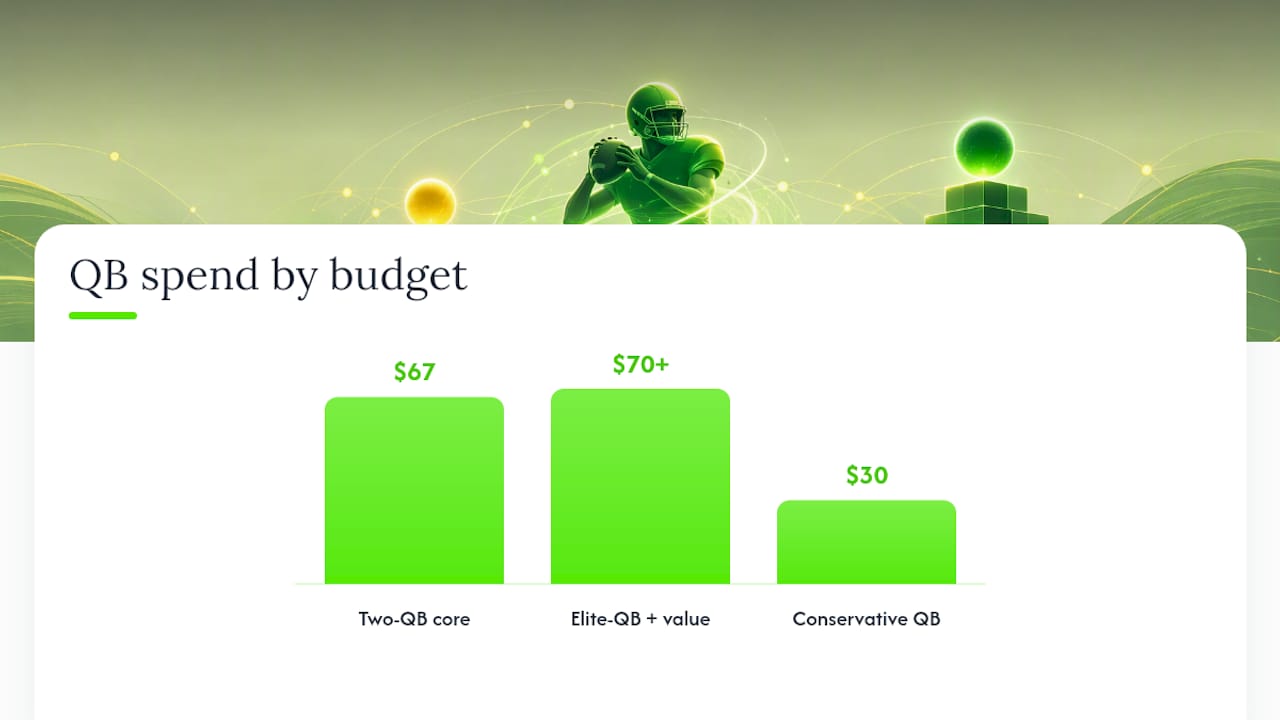
| Two-QB core | $55 (two starters) + $12 (QB3) | $100 | $15 to $25 |
| Elite-QB + value | $70+ on one QB1 | $100 | $15 to $25 |
| Conservative QB spend | $30 (two mid-tier QBs) | $130 | $25 |
The two-QB core budget mirrors what Football Absurdity recommends as a baseline, roughly $50 to $60 on your two starters and another $10 to $15 for a third-QB safety net. The elite-QB-plus-value build works when one or two QBs get bid up early and the rest of the position craters in price, letting you buy RB/WR depth cheap. The conservative build only makes sense in leagues where QB pricing runs unusually low relative to national ADP.
Pro Tip: Nominate expensive RBs and WRs during the first ten picks even if you don’t want them. This drains cash from the room before the QB run starts, and by the time quarterbacks come up for bid, several owners are already budget-constrained.
Deviate from these templates when your league’s actual bidding behavior contradicts them. If two aggressive owners are bidding QBs up past $40 for QB2-caliber talent, don’t chase; let the Greasy Spoon dynamic play out and buy the correction. If your room is unusually cheap on quarterbacks, that’s your signal to lock in the two-QB core early rather than risk a late run driving prices back up.
How to Prepare Before Draft Day
Preparation separates drafters who execute a plan from drafters who improvise under pressure. Run through this checklist in the week before your draft.
- Build a tiered QB board, not a straight rank list, so you know exactly when a tier is about to run dry.
- Set position value bands for RB, WR, and TE so you know your ceiling bid or round for each tier.
- Draft a rough nomination plan for auctions: which names you’ll throw out early to drain budgets.
- Track live ADP for your league type specifically, since Superflex ADP diverges sharply from standard 1-QB ADP.
Run three types of mock drafts before your real one:
- An early-QB-biased mock, where you force two QBs in the first five rounds, to feel out how fast the position actually depletes.
- A value/wait-biased mock, where you ignore QBs until round eight, to see what RB/WR falls into your lap and how thin the QB pool gets by the time you return.
- A mixed-market mock, drafting reactively based on what the room does, to practice reading and reacting to a live QB run in real time.
Bring a simple spreadsheet or app-based tracker into your live draft to monitor remaining auction budgets per team and cross off tiers as players come off the board, and explore the NFL Pick 'Em Strategy Guide for Winning Your Pool for additional competitive draft tactics. A tier sheet you can glance at in five seconds beats a scrolling rankings page every time the clock is running.
Draft-Day Checklist and Mistakes to Avoid
Confirm these basics before your draft room even opens:
- Double-check your league’s scoring settings and Superflex/OP slot count.
- Have your tiered QB sheet and value bands open and visible.
- Set hard budget caps per position if you’re in an auction.
- Plan your first three nominations in advance rather than improvising.
Common mistakes that quietly cost championships:
- Chasing a single superstar QB well past his tier’s fair price. Fix it by capping your max bid before the auction starts and walking away once you hit it.
- Ignoring what opponents have left to spend. Fix it by tracking remaining budgets every few picks; a team with $8 left can’t outbid you no matter how much they want a player.
- Leaving your Superflex slot with only one rosterable QB. Fix it by drafting that third QB before your fourth bench RB/WR, not after.
Adjusting for League Size and Scoring Settings
A 10-team Superflex league behaves very differently from a 14-team one. Smaller leagues leave more startable QBs on waivers, which slightly favors Value/Wait since replacement-level options remain reachable after the draft. Larger leagues drain the QB pool fast, pushing Early-QB from “a solid option” to “close to necessary” once you’re past pick 8 or 9.
Scoring settings matter just as much as league size. A 6-point-passing-TD format inflates elite QB scoring gaps even further than the more common 4-point setting, making Early-QB more attractive across the board. If your league also runs an extra bonus for 300-yard passing games or rewards rushing QBs heavily, mobile quarterbacks jump tiers, and your board should reflect that before you sit down to draft, not mid-round.
Mandatory 2-QB leagues, where both quarterback slots are locked rather than flexible, effectively force Early-QB on every drafter regardless of preference, since there’s no flex slot to bail you out if you wait and miss.
What Superflex Drafting Means for In-Season Management
The gameplan you choose on draft day shapes your entire season’s roster management, not just your opening lineup. Teams that built a two-QB core enter Week 1 with trade leverage other rosters don’t have; a surplus starting-caliber QB is one of the most tradeable assets in Superflex leagues, since every other team wants Superflex insurance too.
Value/Wait drafters need a sharper waiver-wire plan from Week 1 on, since their bench QB situation is usually thinner. Prioritize streaming favorable early-season matchups and watch for backup QBs who inherit starting jobs; in Superflex, a newly-installed starter is often a top-30 waiver claim overnight, not a speculative add.
Either build should treat the trade deadline as a chance to consolidate. Two-QB rosters can flip a surplus starter for a difference-making RB or WR once bye weeks pass, while Value/Wait rosters that landed elite skill-position talent can sometimes buy a QB upgrade cheap from a team that overdrafted the position and wants to sell the depth.
Consistent Rules Beat Reactive Drafting
The biggest mistake I see in Superflex drafts isn’t picking the wrong gameplan. It’s picking a good one and abandoning it by round six because a name fell further than expected. A two-QB core plan only works if you actually execute it when the moment comes, not just when it’s convenient.
Your draft-day discipline carries straight into your in-season management. Owners who set hard tiers and budget caps before the draft tend to make cleaner trade and waiver decisions all season, because they already know what a “good enough” replacement looks like at every position. Reactive drafters tend to make reactive trades too, chasing last week’s box score instead of season-long value.
Whichever gameplan you choose, revisit it against your actual league’s scoring settings and roster requirements before you finalize a cheat sheet. A perfect Early-QB plan for a 6-point-passing 12-team league can be the wrong plan entirely for a 10-team, standard-scoring format with deep benches.
How Manny’s Variety Supports Your Draft Prep
Manny’s Variety gives Superflex drafters something most cheat sheets can’t: a track record you can actually verify, built on 63.5% graded accuracy across more than 1,600 tracked picks. That kind of transparent, permanently archived history is rare in an industry full of unverifiable claims.
The same predictive engines that power daily sports picks translate directly into draft prep. Real-time analytics and thousands of simulations behind the platform’s AI sports betting tools model outcomes the same way a strong Superflex mock draft should: repeatedly, under different market conditions, until patterns emerge. Three things matter most for drafters heading into 2026:
- Simulation-driven insight into how positional value shifts under different scoring rules, similar to how Manny’s Variety models game outcomes across sports.
- Data-first decision frameworks, the kind detailed in the platform’s NFL player props strategy coverage, which reward the same tiered, disciplined thinking this guide recommends for QB boards.
- A transparent, graded track record you can check yourself rather than take on faith, the same standard your draft prep should hold your own cheat sheet to.
See exactly how the picks are built and graded on the how-it-works page, and check current plans on the pricing page before your next slate.
Sources
- Fantasy Football | Superflex Draft Strategy & Targets | 2026
- The ultimate Fantasy Football auction draft guide (2026)
- Auction draft strategy (Bleachernation)
- Superflex fantasy football strategy for drafting quarterbacks (CBS Sports)