

Casual Bettors: Sports Picks Pay Only If Fee Is <15% of Profit
For most casual bettors, paid sports picks are not worth it. Low volume means the subscription cost eats any theoretical edge before it compounds. Picks become worth buying only when a service publishes verified closing line value (CLV), your bet volume is high enough to amortize the fee, and the math on expected value (EV) actually works in your favor. Services which publish AI-driven, third-party-logged records are the exception worth examining. Run the numbers below before you subscribe to anything.
TL;DR:
- Paid sports pick services only become worthwhile if they publish verified closing line value and your betting volume is sufficient to offset the subscription fee.
- The long-term profitability of a service depends on its ability to consistently beat the market’s closing lines and provide transparent, large-sample history logs.
- Betting strategies centered on tracking expected value and closing line value, alongside disciplined bankroll management, outperform simply following picks.
- Verification of a service’s performance should include third-party-logged records, full loss history, and transparent stake sizing, not just win rates or curated results.
- Most casual bettors should focus on developing their own record-keeping and CLV tracking rather than relying solely on external pick services.
Table of Contents
- What Are Paid Sports Picks, and How Do These Services Work?
- What Do Vig, EV, and CLV Actually Mean for Your Bottom Line?
- When Can Paid Picks Actually Be Worth It?
- How Do You Vet a Picks Service Before You Pay?
- What Delivers Better ROI Than Buying Picks Alone?
- What Does Manny’s Variety Claim, and How Should You Check It?
- What Should a Casual Bettor Actually Do With This?
- How Do You Try Manny’s Variety Without Overcommitting?
- Where Can You Verify the Math and Track Records Yourself?
- Sources
- FAQ
What Are Paid Sports Picks, and How Do These Services Work?
A handicapper is someone who analyzes games and sells their conclusions. A tout is the less flattering version of the same word, usually reserved for sellers who oversell win rates without proof. Both terms describe the same basic product: someone else’s opinion on which side of a bet has value, delivered to you for money.
Pricing models vary widely. Some services charge per pick, others run monthly subscriptions, and a smaller group sells “VIP” packages bundling multiple sports or premium plays at a steep markup. The packaging matters less than what is inside it.
Selling picks can be a rational business even for a genuinely sharp bettor. Sportsbooks limit or ban players who consistently beat closing lines, which caps how much a skilled bettor can win directly. Selling access to that skill, or to the tools behind it, becomes a second income stream that does not carry the same limit risk.
What a legitimate service typically delivers:
- Daily or weekly picks with a stated side, total, or prop
- Written reasoning explaining the edge, not just a final answer
- Supplementary tools like line-movement trackers or CLV calculators
- An archived log of every pick, wins and losses included
The gap between a real service and a marketing operation shows up almost entirely in that last bullet. Anyone can claim a good record. Few will show you the losses.
What Do Vig, EV, and CLV Actually Mean for Your Bottom Line?
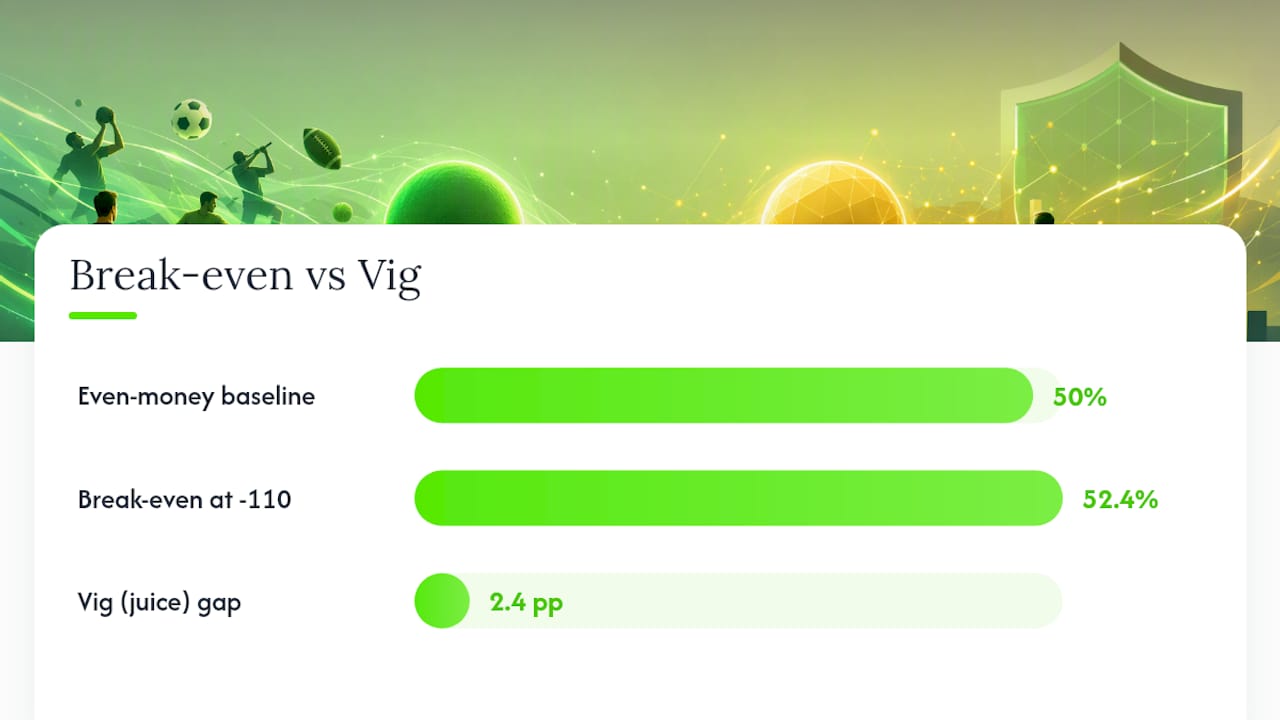
Every bet you place at standard odds includes a hidden tax. At the common -110 price, you need to win roughly 52.4% of your bets just to break even, according to a Claremont Colleges analysis of sports betting markets. That gap between 50% and 52.4% is the vig, or juice, and it is the reason so many bettors who “win more than they lose” still end up down money over a season.
Statistic Callout: Professional bettors who sustain profitability over large samples average roughly 2% to 5% return on investment (ROI), per the same Claremont research. It is a slow, grinding edge that only shows up over hundreds or thousands of bets.
Three concepts determine whether a paid service can turn that edge into real profit for you:
- Closing line value (CLV) compares your bet’s price to the final market price before the game starts. Consistently beating the close is the strongest available proxy for genuine skill, according to MarketMath’s breakdown of betting math, because it isolates pricing skill from luck.
- Volume and bankroll threshold decide whether a subscription fee is a rounding error or a profit killer. A $40 monthly fee against $2,000 in expected profit barely registers. The same $40 against $150 in expected profit erases most of the point.
Market-efficiency research backs up why win rate alone misleads: sportsbooks price most outcomes close to the true probability, so predictive models built on real inefficiencies are hunting for small pricing gaps, not guaranteed winners.
When Can Paid Picks Actually Be Worth It?
Paid picks clear the bar under a fairly narrow set of conditions, and most services fail at least one of them.
- Your volume is high enough that the subscription is a small fraction of expected profit. A rough guideline: if the fee runs above 10% to 15% of your projected monthly profit from following the service, the math is working against you before you place a single bet.
- The provider publishes third-party-verified CLV, not just win percentage. A quoted win rate with no CLV data tells you almost nothing about repeatable skill.
- Full-history logs exist, including losses, across a large enough sample. Analysis of tracked bettor data found that consistent profitability shows up over hundreds of wagers, not a hot 20-pick stretch, which is why sustained records matter more than short win streaks in a Sports Command tracking study.
- The service bundles tools or education, not just picks. A provider that teaches you to spot line value or tracks CLV alongside its own picks lets you capture more of the edge over time instead of staying dependent on the subscription forever.
- Suggested unit sizing matches your actual bankroll. A service recommending 3-unit plays on a bankroll built for 1-unit stakes will blow up your variance regardless of whether the picks are good.
Pro Tip: Before you pay for a single month, ask the service for their full historical log filtered by sport and bet type. If they hesitate or only show a curated “best of” sample, that is your answer.
Niche markets deserve a specific mention. A service that shows a repeatable edge in markets like WNBA player props or lower-tier soccer totals, where fewer sharp bettors compete for the same inefficiencies, has a more believable case than one claiming a 65% edge on NFL sides, one of the most heavily bet, tightly priced markets in existence.
How Do You Vet a Picks Service Before You Pay?
Run through this sequence before handing over a card number:
- Ask where the record is verified. Legitimate services log picks on a third-party platform with timestamps, not a private spreadsheet the seller controls.
- Check for CLV reporting. A provider that shows you where their picks closed relative to the line they bet is showing you actual skill, not survivorship-biased marketing, per the framework laid out in Sports Command’s premium picks analysis.
- Confirm the sample size. A few dozen picks prove nothing. Look for hundreds of graded results minimum before trusting a claimed edge.
- Review stake sizing transparency. The service should tell you exactly how it sizes units, and that sizing should scale sensibly, not swing wildly between 1 and 10 units based on “confidence.”
- Look for a trial, day pass, or refund policy. A service confident in its numbers has no reason to lock you into a long commitment before you can check its work.
Watch for these red flags: a record with suspiciously few losses, a provider who deletes or blocks critics on social media, win-rate claims above 60% with no CLV to back them, and aggressive upsell pressure toward an expensive VIP tier before you have seen a single free result. A 2026 review of the handicapper market found that a large share of paid services run on marketing rather than evidence, and the ones worth paying for are consistently the most transparent about sample size and methodology, not the ones with the boldest claims.
Before you subscribe, ask the provider directly: “Can I see your full CLV history?” and “What happens if I want a refund after week one?” How they answer tells you more than their sales page ever will.
What Delivers Better ROI Than Buying Picks Alone?
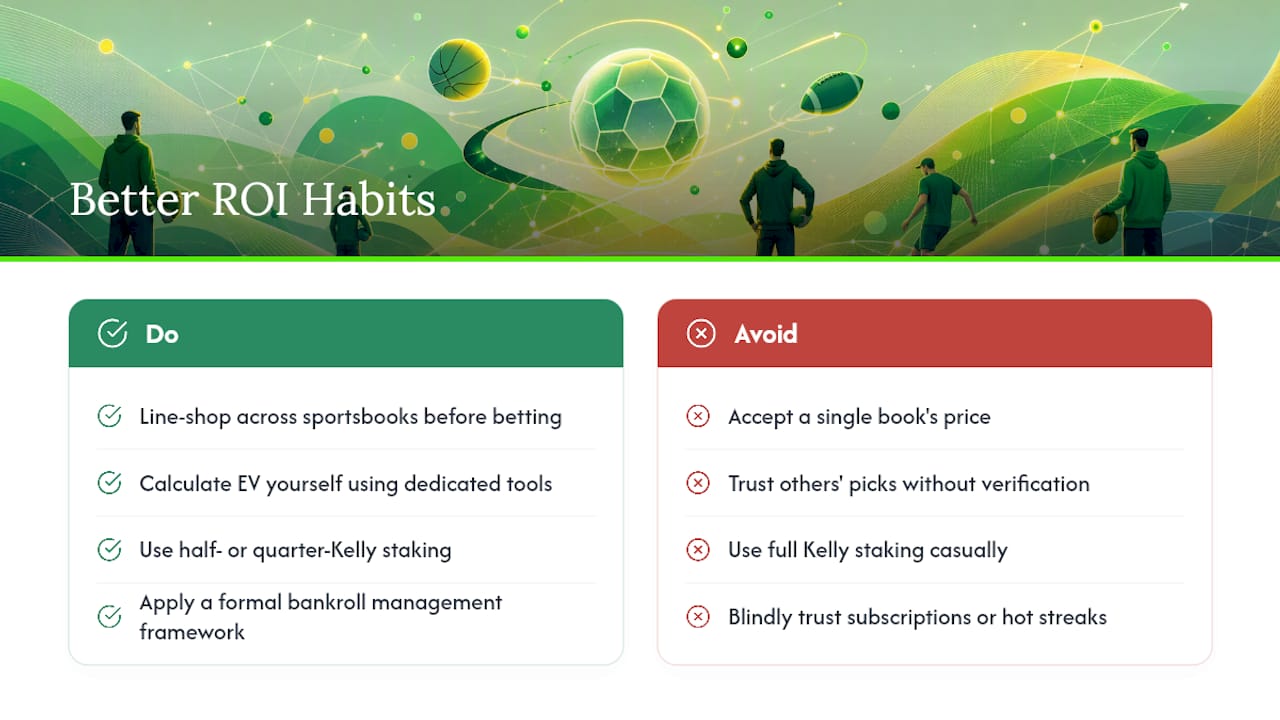
Line shopping across multiple sportsbooks often produces more value than any single picks service, because the same bet priced at -105 at one book and -115 at another changes your break-even win rate immediately. That difference compounds every time you bet.
Learning to calculate EV yourself, using tools built for exactly that purpose, turns you into your own verification system instead of trusting someone else’s claims.
Bankroll management matters just as much as pick quality. Full Kelly staking is too aggressive for almost anyone, and disciplined bettors typically use half or quarter Kelly variants to manage variance without abandoning the underlying math, according to empirical tests of Kelly staking published in academic literature. Pairing that with a bankroll management framework keeps a bad month from becoming a blown bankroll.
The most durable habit is record-keeping. Tracking your own 500 or more bets in a simple spreadsheet before trusting any external claim, your own or a service’s, tells you whether you have an edge or a hot streak. A picks subscription paired with your own EV and CLV tracking beats blind trust in either alone.
What Does Manny’s Variety Claim, and How Should You Check It?
Some services run sport-specific AI engines using real-time analytics and Monte Carlo-style simulations across major markets. They may publish tracked records of graded picks with reported win rates and net returns, positioned against a category where verifiable records are rare.
That is a bold claim, and it should be checked the same way any claim in this article recommends. Look at the public grading and archived pick history rather than taking the summary number at face value. Check whether individual picks show timestamps and closing-line comparisons, not just final results. Review how the AI engines and simulations actually work before assuming the process behind the number.
The smartest path is starting small: track your own CLV against picks you follow, compare that to sharp closing lines, and let a trial period do the convincing instead of the sales copy.
What Should a Casual Bettor Actually Do With This?
Most casual bettors are better served learning the process than paying for someone else’s opinion. Record-keeping, CLV tracking, and disciplined staking build a skill that compounds, while a subscription only pays off inside a narrow set of conditions this guide already laid out.
If you do try a paid service, treat it as an experiment, not a leap of faith. Log every pick against the closing line yourself. Use trial periods to test the claims before committing real money to a longer subscription. The habits matter more than any single provider’s marketing.
— Manuel
How Do You Try Manny’s Variety Without Overcommitting?
Some platforms are built around verification standards this article argues every paid service should meet: public grading, archived logs, and CLV visibility instead of curated highlight reels.
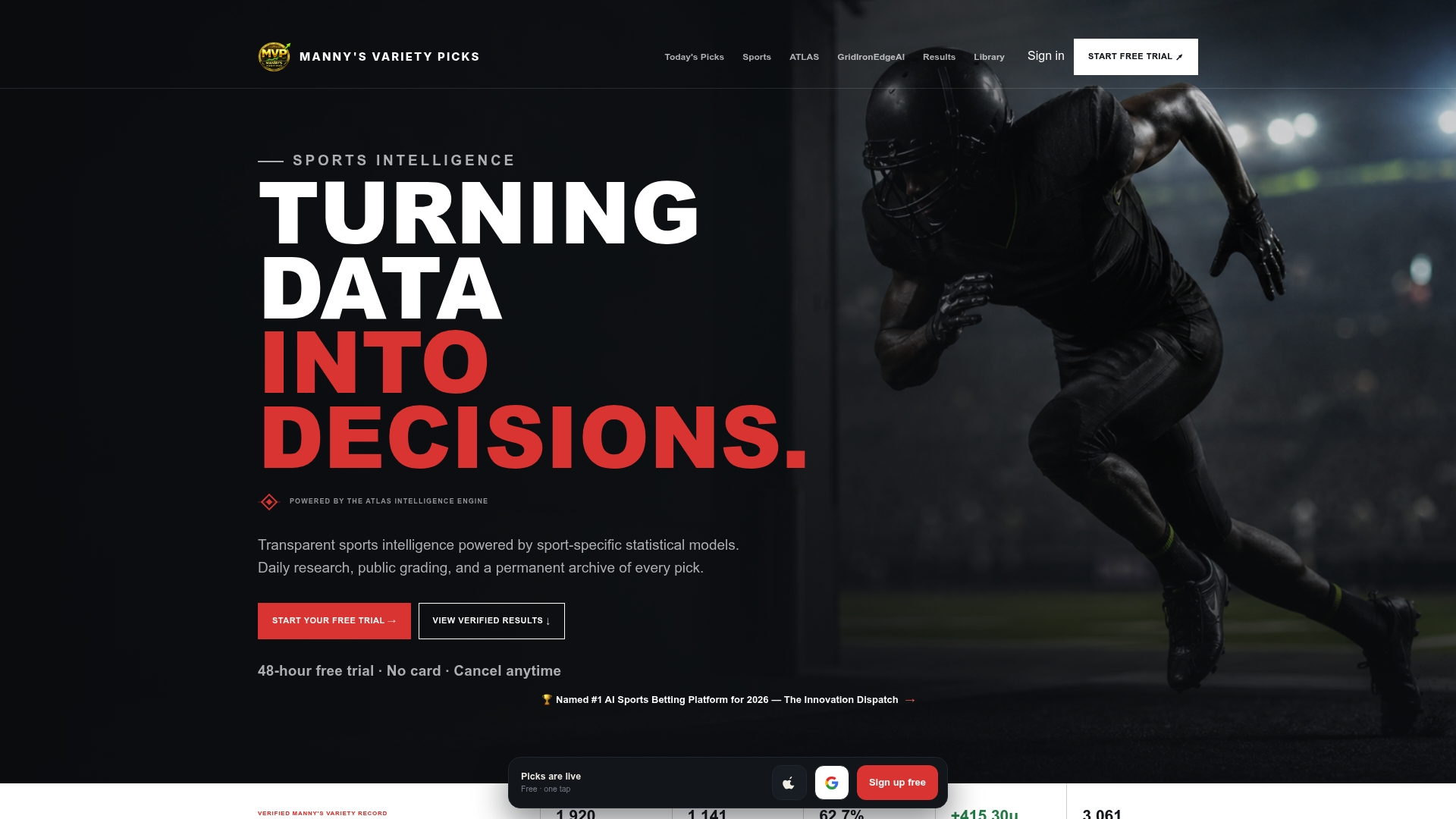
The platform offers three tiers on its pricing page: a Free plan at $0, a Core plan at $39.99 per month, and an Elite plan at $79.99 per month, along with short-term day or week passes for readers who want to test before committing monthly. During any trial window, pull up the archived pick logs, compare closing lines against the picks issued, and check whether stake sizing stays consistent across sports. If you bet props or build parlays, the game analysis and matchup breakdowns section shows the reasoning behind specific plays rather than a bare recommendation.
Start with the Free tier, verify the CLV data yourself, then decide if Core or Elite earns your subscription. Sports betting carries real financial risk regardless of which service you follow, so size every stake to what you can afford to lose.
Where Can You Verify the Math and Track Records Yourself?
Check break-even win rates and professional ROI benchmarks through the Claremont Colleges thesis on betting markets. For hands-on EV modeling, OddsJam’s expected value calculator lets you test how small price differences change required win rates. Providers describing their own performance verification methodology offer a useful template for what transparent reporting should look like.
Sources
- Claremont Colleges thesis on sports betting / market effects
- PLOS ONE research on predictive models and market efficiency (2023)
- MarketMath guide to sports-betting math (Kelly, EV, CLV)
- Profitable betting: who actually wins (Sports Command)
FAQ
Are Paid Sports Picks Worth It for a Casual Bettor?
Usually not, unless your betting volume is high enough that the subscription cost stays under roughly 10% to 15% of your expected profit and the service publishes verified CLV. Below that volume, the fee typically erases whatever edge the picks provide.
How Good Is AI at Picking Sports Bets?
AI-driven models improve probability estimates and can surface pricing inefficiencies faster than manual analysis, but they do not eliminate variance or guarantee a win on any single bet, according to market-efficiency research on predictive models. Services like Manny’s Variety use these models to scale analysis across sports, but the same verification standards, checking CLV and full-history logs, still apply.
Is It Profitable to Bet on Sports Overall?
Tracking data on thousands of bettors found only about 3% to 5% achieve sustained profitability, and the winners are distinguished by staking discipline, line shopping, and CLV tracking rather than raw win rate, per a Sports Command study of tracked bettors. Profitability is achievable but rare, and it depends far more on process than on any single pick or provider.
How Much Does Manny’s Variety Cost?
Manny’s Variety offers a Free plan at $0, a Core plan at $39.99 per month, and an Elite plan at $79.99 per month, with short-term day and week passes also available. Each tier gives access to different levels of picks, tools, and fantasy features.
What’s the Fastest Way to Check If a Picks Service Is Legit?
Ask for the full historical log, not a curated highlight reel, and check whether it includes closing-line value alongside win percentage. A transparency framework for evaluating premium picks treats documented CLV and full-loss disclosure as the minimum bar for a credible claim.