

Three Bets Only: Live Betting Strategy Anchored to Your Pre Game Line
Live betting can be profitable for disciplined bettors, but only if you follow one keystone rule: set a pre-game number before kickoff and let that number, not the scoreboard, drive every in-play decision. Cap your bets per game, watch the actual game instead of just the odds, and only fire when the live price clearly disagrees with what you already know.
TL;DR:
- Set a pre-game line as your in-play anchor and compare all live odds against it to avoid reacting solely to scoreboard changes.
- Limit each game to three live bets, size bets at 1 to 2 percent of your live bankroll, and avoid chasing lines or overusing cash-out features.
- Focus on value gaps of two or more points on spreads or four or more points on totals, verifying across multiple sportsbooks before betting.
- Recognize that live odds lag behind real-time information, especially in NFL, NBA, tennis, and baseball, creating specific opportunities and risks.
- Use AI engines and tools to identify market drift from fair lines, but always combine automated signals with your own observations and disciplined bankroll management.
Table of Contents
- How Live Betting Odds Work During a Game
- Core Live Betting Tactics and When to Use Them
- Bankroll Rules Built for In-Play Betting
- How to Spot a +EV Live Bet
- Where Live Edges Show Up by Sport
- Mistakes That Quietly Drain Live Bettors
- How Manny’s Variety Applies These Rules to Live Picks
- A Simple Routine for Staying Disciplined In-Play
- Get Manny’s Variety’s AI-Driven Live Picks Alongside Your Own Rules
- Where to Verify These Models and Get Help If Needed
- Sources
How Live Betting Odds Work During a Game
Live odds move constantly because the inputs behind them never stop changing. Sportsbooks and their pricing models recalculate lines using several live signals at once:
- Score differential and time remaining
- Possession and field/court position
- Injuries, ejections, and foul trouble
- Volume and direction of public money on each side
Automated models update these numbers fast, but not instantly. Books build in a short acceptance delay, typically 3 to 8 seconds, so their systems can confirm a bet before a bettor acts on information the model hasn’t priced yet. That delay is also why bets sometimes get rejected: the number you tapped may already be stale by the time the book processes it.
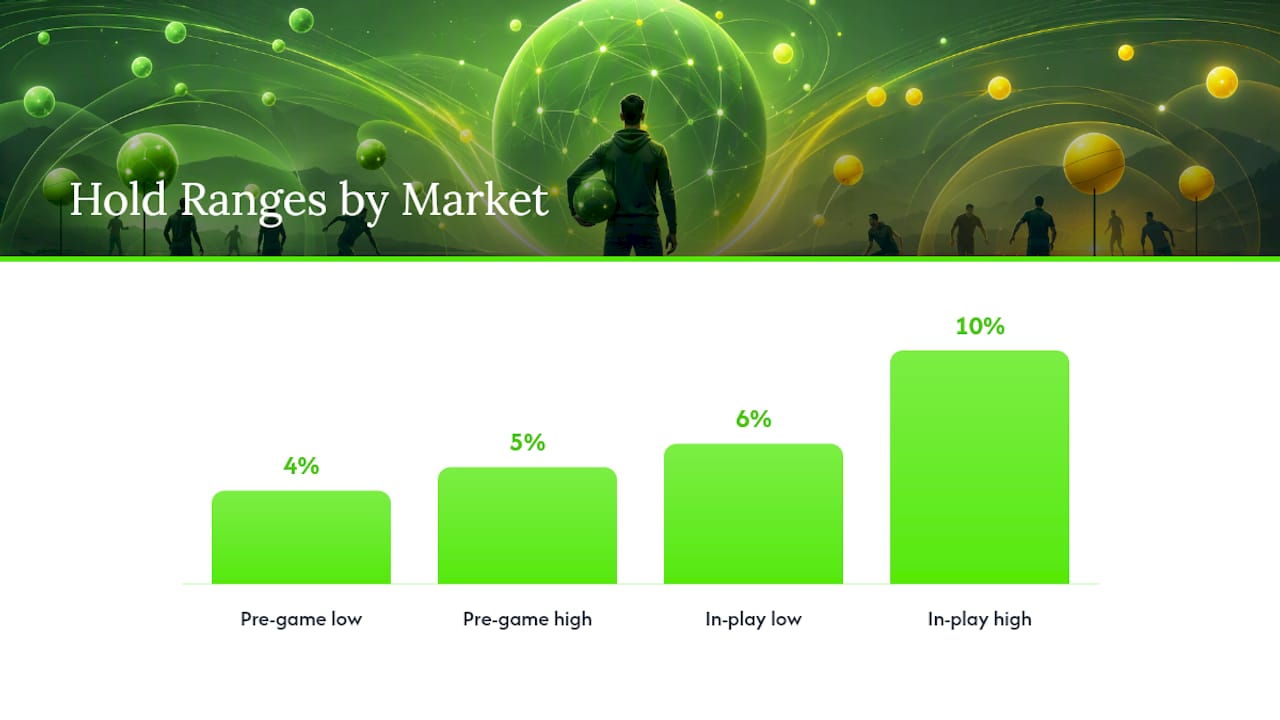
This pricing friction shows up in the hold. In-play markets commonly carry a 6 to 10 percent hold, compared with roughly 4 to 5 percent on pre-game spreads. You’re paying more to play live, which means your edge has to be real, not marginal. Win-probability models factor in score, clock, and pregame spread, but they can’t see a hobbled quarterback limping to the sideline. That visible gap between what a model knows and what you can see with your own eyes is where most live betting strategy actually lives.
Core Live Betting Tactics and When to Use Them
Treat live betting as a short list of repeatable plays, not a constant stream of reactions. Here’s the priority order that holds up across sports:
- Anchor to your pre-game line first. Before the game starts, write down your own number for the spread, total, or moneyline. Every live price gets measured against that anchor, not against whatever the crowd is doing.
- Fade single-play overreactions. A pick-six or a buzzer-beater three often swings the live line further than the game state actually justifies. If your pre-game number says the favorite is still live, that’s your signal to bet against the panic, not with it.
- Back favorites who trailed early for structural reasons. A team down 10 because their best player picked up two early fouls, or a star coming back from a rest possession, often gets undervalued by models that just see the score. Watching the broadcast for rotation and injury news gives you information the closing model hasn’t absorbed yet.
- Target player props and micro-markets. Next-drive scores, next-batter outcomes, and live player props move slower than main lines because fewer books and fewer bettors are pricing them closely. That lag is where sharper bettors find room.
- Use middles when line drift opens a gap. If you bet a favorite at minus 3 pre-game and the same team falls behind and the live line drifts to plus 4, betting the underdog live creates a two-way winning window if the final margin lands between the two numbers.
Pro Tip: Keep a running note of your pre-game number for every game you plan to watch live. If you can’t recall your anchor within five seconds of a line move, you’re reacting to the scoreboard instead of your own analysis, and that’s exactly how disciplined bettors turn into tilt bettors.
Bankroll Rules Built for In-Play Betting
Live markets punish loose bankroll habits faster than pre-game bets do, mostly because the higher hold and rapid-fire pace invite more frequent, smaller decisions that add up.
- Ring-fence a separate live-betting bankroll from your pre-game funds so one bad in-game session can’t bleed into your season-long bankroll.
- Size each live bet at 1 to 2 percent of that live bankroll; reserve anything above that for spots where your pre-game anchor and the live number diverge sharply.
- Cap yourself at three live bets per game and set a hard session limit across the slate, win or lose.
- Log every live bet with the pre-game line, the live line you took, and the reasoning, then review weekly instead of adjusting mid-game.
Cash-out features deserve real caution here. They’re generally priced with a built-in margin favoring the book, so leaning on cash-out as a habit tends to leak expected value rather than protect it. Treat cash-out as a bankroll-control tool for extreme, unplanned situations, not a strategy.
Pro Tip: Force a five-minute cooling-off period after any loss before placing your next live bet. Most bad live decisions happen in the sixty seconds right after a bad beat, not before it.
Full stake-sizing frameworks and record-keeping templates are covered in a bankroll management guide, which applies the same percent-of-bank logic across both pre-game and live betting.
How to Spot a +EV Live Bet
Finding real value in-play comes down to comparing the live number against a fair-line benchmark, then checking that gap against a threshold before you bet.
- Run a live win-probability calculator using score, time remaining, pregame spread, and possession to get a fair line.
- Treat a gap of roughly 2 or more points on spreads, or 4 or more points on totals, as a signal worth investigating further.
- Shop the same live number across two or three sportsbooks before betting; a five-second price check across books often reveals which one is slow to move.
- Keep a second screen open for live stats, play-by-play, and injury reports, since visible information almost always beats the model to the punch.
The gap that matters: a calculator flagging a 2-point spread discrepancy or a 4-point total discrepancy is a starting signal, not a guarantee. These models can’t account for a visible injury or a bench-clearing substitution pattern, which is exactly the information a live bettor watching the broadcast has and the model doesn’t.
When a book rejects your bet or the price moves before your ticket confirms, don’t chase the new number out of frustration. That gap is often the acceptance delay working as designed, and the smarter move is to recheck your calculator against the new line before firing again. Manny’s Variety breaks down these calculation methods further in its expected value betting guide, and quick odds conversions are covered in this odds-to-probability reference.
Where Live Edges Show Up by Sport
Every sport creates its own version of the same lag between visible information and model pricing.
- NFL: Next-drive and next-score markets react slowly to momentum shifts. A turnover often overcorrects the line more than the actual win probability justifies, and possession matters disproportionately in the final two minutes.
- NBA: Rotation patterns drive value. Three-point variance inflates in-game totals temporarily, and garbage-time stretches create backdoor value on both sides of the total.
- Tennis: Server hold and break patterns swing in-play prices hard within a single game. A set-one collapse rarely means the match probability collapsed by the same margin.
- MLB: Bullpen matchups late in games move run-line and total value fast, especially when a team’s best relief arm is unavailable that day.
Mistakes That Quietly Drain Live Bettors
Tilt and chasing account for more live-betting losses than bad handicapping ever does. A single bad beat leads to a bigger next bet meant to “win it back,” and that cycle compounds fast inside a single game.
- Betting more frequently than your session cap allows because the action feels available
- Leaning on cash-out constantly instead of running the actual EV math first
- Chasing a stale line during the acceptance delay instead of rechecking your calculator
- Stacking correlated live parlay legs (same team, same quarter) that inflate perceived odds without real independent value
Partner resource Dropskin’s guide on avoiding common betting mistakes covers similar discipline failures in fast-moving markets, and the parallels to live sports betting are direct.
How Manny’s Variety Applies These Rules to Live Picks
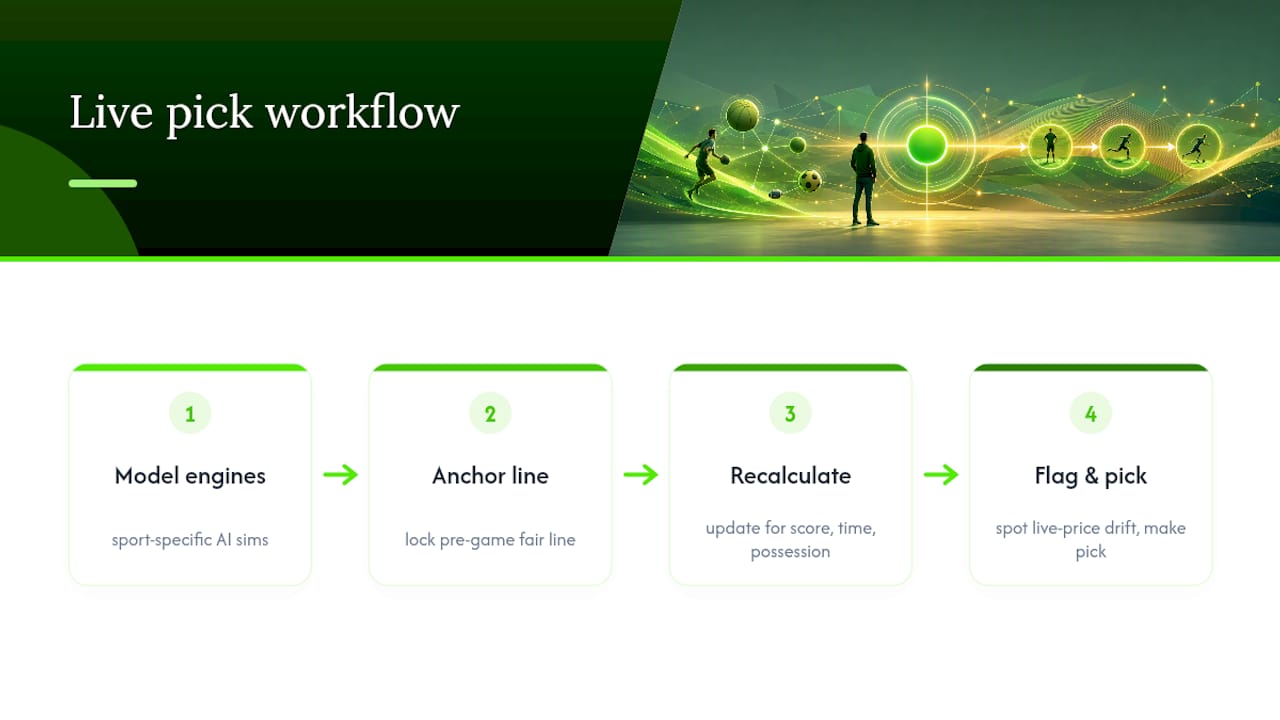
Some platforms run sport-specific AI engines across MLB, NBA, and NFL, built on real-time analytics and thousands of simulations per matchup.
A common workflow mirrors the anchor-first approach: locking a pre-game fair line, then recalculating as score, time, and possession shift, flagging spots where the live price drifts from that fair number.
A team down 14 in the third quarter looks hopeless on the scoreboard. If simulations still give them a real shot because the shooting variance evens out over a full game, that gap between the scoreboard and the model is where the pick gets made.
A Simple Routine for Staying Disciplined In-Play
Before I watch any game live, I write down my number, the spread or total I’d bet pre-game, and I don’t touch it once the broadcast starts. I run two screens: the game itself and a win-probability calculator, checking the gap only at natural breaks like timeouts or between innings. Three bets per game, one session cap for the night, and every result logged the next morning. Small stakes for the first month taught me more about my own bad habits than any strategy article did.
Get Manny’s Variety’s AI-Driven Live Picks Alongside Your Own Rules
Some services give disciplined bettors a shortcut for the part of live betting that eats the most time: recalculating a fair line in real time while a game is moving fast. Sport-specific AI engines run continuous simulations across MLB, NBA, and NFL, flagging live spots where the market has drifted from a defensible fair number, the same anchor-first logic covered above, without you having to run the math yourself mid-broadcast.

Pair a subscription with your own bet-count caps and session limits, and you get a second set of eyes checking the line while you stay focused on watching the game for injuries and rotation news. The how-it-works page walks through the AI methodology and subscription tiers, and the live picks page shows current in-game recommendations as they’re posted. Start with a trial, apply the bankroll rules above, and track your own results against the platform’s public grading.
Where to Verify These Models and Get Help If Needed
- Sportsbettingoddscalculator for benchmarking fair lines in real time
- GambleAware for support and guidance if live betting frequency starts to feel out of control
- Manny’s Variety’s analytics tools roundup for additional calculators and tracking software
- Railbird’s breakdown of mechanical betting errors for a useful parallel on why automated, rule-free betting habits lose money over time
Sources
- Live In-Game Betting Strategy: How to Bet Smarter in 2026 | DC
- Sportsbettingoddscalculator
- Live betting, explained: A complete guide to in-play sports wagering, including tips, strategies and more | Sporting News
- GambleAware